Delivery rounds, pickup windows and your market stall, from one bakery shop
Run delivery rounds, a counter pickup window and your market stall from one bakery shop: separate deadlines, one stock count a day, standing orders.
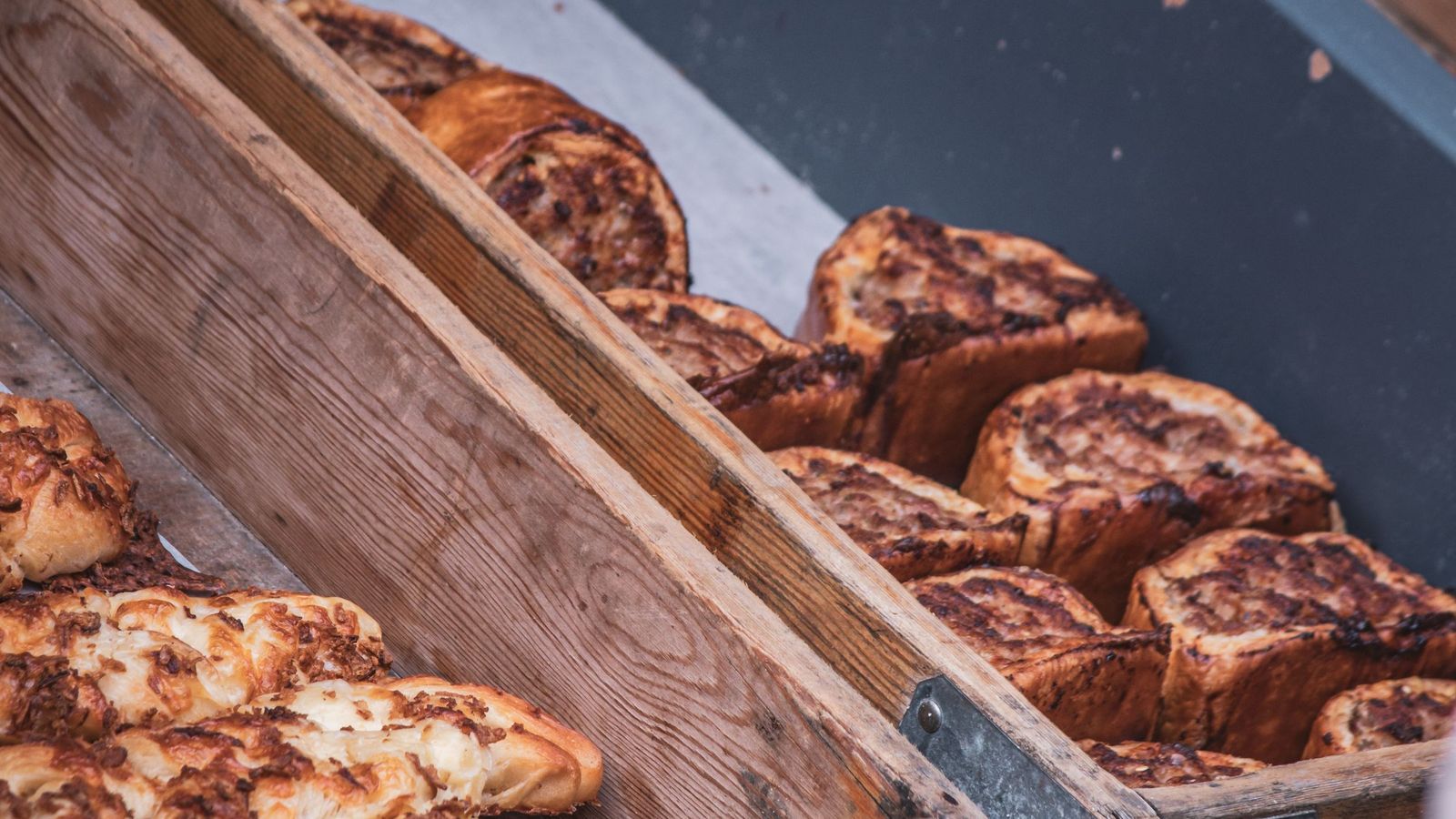
Most microbakeries never pick one way to hand bread over. Tuesday is a delivery round. Thursday is a counter window at the bakery. Saturday is the stall. That is three handoffs, and if each one lives in its own notebook, app or message thread, you spend Sunday night stitching the week back together.
Recurring revenue does not care how the bag leaves the building. It cares that next week is already spoken for. The point of one shop is simple: one storefront, one set of products, one stock count per day, and standing orders that ride on whichever handoff each regular already uses.
Two building blocks, not three
In BakeFleet there are delivery rounds and there are pickup windows. That is it. There is no separate market setting. Your market stall is a pickup window that happens to sit at the market: Saturdays 8am to noon, at the stall, customers order ahead and collect from you there.
That is not a technicality. It means the stall gets everything a pickup window gets: its own days, its own fee, its own order deadline, its own cap on how many orders a Saturday can take.
One honest caveat from the /faq: a pickup window repeats every week. If you only do the market some Saturdays, don't build the stall as a window you will keep cancelling. Run your pickup at the bakery instead and tell regulars where the bread is.
So the "three modes" most bakers describe are really:
- one or more delivery rounds
- a pickup window at the bakery
- a pickup window at the market stall
Each with its own days, fee and deadline. How many rounds and windows you can run at the same time depends on your plan, so check /pricing before you sketch a four-handoff week.
Who gets what on each handoff
This is the part that catches people.
Delivery is by weekly standing order only. A round is filled by regulars who signed up for the same bag every week. Nobody places a one-off delivery for Friday's dinner party. That is a feature, not a gap: a route that changes shape every week because of one-off orders is a route you re-plan every week.
Pickup windows take both. Standing orders work on pickup exactly as they do on delivery, and anyone who just wants a loaf this week can order once and collect. That includes the market window. The person who walks past your stall in June, likes the rye and wants two next Saturday can order ahead without committing to anything.
So when someone asks for a one-off, the answer is a pickup window. When someone wants the same thing every week on their doorstep, the answer is a delivery standing order. You stop negotiating case by case.
The stall is where strangers turn into regulars; farmers market preorders vs a weekly bread subscription walks through that move.
Three clocks, one kitchen
Every round and every window keeps its own order deadline. The deadline is how far ahead you need to plan the bake, and it is also when the money moves: at cutoff the card is charged the estimated total and the order locks. Not at checkout. Not a month up front.
Different handoffs need different clocks. A Saturday stall pickup might close Thursday so you can mix on Thursday night and bake Friday into Saturday morning. A weekday delivery round can stay open until the night before. Force all three onto one "order by Sunday" rule and something breaks. Either the stall gets underbaked because Sunday was too early to know, or the round gets overpromised because Sunday was too late to plan.
If clocks start to multiply and you want the full walk-through, how to set pickup windows and standing-order cutoffs is the companion piece.
Fees follow the handoff too. A delivery fee that covers fuel and an hour of driving is not a counter pickup, which is often free. One fee across everything teaches you to undercharge the expensive handoff.
Even sales tax follows the handover: deliveries are taxed where the customer is, pickups where they collect, from a rate you set per postal code.
One stock number per day
Stock is a number for each day of the week. You set how many country loaves you make on Tuesdays, how many on Saturdays, once, and it repeats. Every order reserves what it takes the moment it is placed. Two people reaching for the last loaf at the same second cannot both get it.
That count belongs to the day, not to a handoff. So if Saturday is both a small morning round and the stall window, they draw on the same Saturday number. Set Saturday's sesame at 24 and the shop stops selling sesame for that day at 24, wherever the orders came from. No private stall stash. No second spreadsheet pretending the market has its own warehouse.
On top of stock, each round or window can cap total orders per date. That is the lever for the stall: if the van holds forty bags, cap the Saturday window at forty and stop worrying about it.
After the last cutoff for a day, locked orders plus the walk-up headroom you chose to leave is your brief. Mix to it.
A normal week with three handoffs
Say you bake from a small leased kitchen, you run one delivery round on Tuesday, a counter window on Thursday afternoon, and the stall on Saturday.
Sunday. Nothing to rebuild. Stock repeats from last week. You glance at the Tuesday standing orders that will lock tomorrow night, maybe nudge Tuesday's focaccia up by four because two new regulars started. Feed the levain. Go to bed.
Monday night. The Tuesday round closes. Standing orders for the round are generated, stock is reserved, cards are charged. Anyone who meant to skip had until now to do it from their own account.
Tuesday. You bake the round. Once it closed, the stops were put in driving order and your driver, maybe you, maybe your partner, has a phone link with one-tap directions. The driver's doorstep photo lands on the customer's receipt, which ends most "did it come?" emails. Meanwhile Thursday and Saturday are still open on their own clocks. Somebody starts a Thursday pickup standing order. Somebody else orders a one-off Saturday rye from the stall window.
Tuesday evening. Thursday counter window closes. Charged, locked.
Thursday noon. Stall window closes. Saturday's demand is now a number instead of a hunch. You mix Thursday night.
Thursday afternoon. Counter pickup. Bags have names on them.
Friday into Saturday. Bake for the stall. Standing-order bags and preorders are packed and boxed by name before you leave. Walk-ups buy what is left of the Saturday count, and when you sell out, you sell out.
That week is three handoffs and zero glue. The recurring part shows up as orders already locked on each clock instead of a Sunday rebuild.
Growing without boiling the oven
Add a handoff when demand and oven time say so. Not because a full-looking settings page feels more like a real bakery.
If all your density is on pickup, run pickup hard before inventing a delivery round to look serious. If you have plenty of interest from addresses you do not deliver to yet, that interest has somewhere to go: customers outside your area get a waiting list instead of a checkout they can't finish, so you can see where demand builds before you add a route. More on reading that signal in using a delivery waitlist before you expand.
And if the stall already pays its pitch fee and has regulars, keep it. Subscriptions do not mean the market goes away. The market gets a deadline and a standing-order path.
When you do add a round or a window, check what your plan covers on /pricing. Then start the new one small. One new handoff per season is plenty.
Edge cases once two or three handoffs are live
A delivery regular wants to switch to Thursday pickup. Customers can pause, skip or edit right up until cutoff, so the clean path is a new Thursday pickup standing order and a paused delivery one. Before this week's deadline, the change counts this week. After it, this week's bag is already locked and charged.
A delivery customer wants a one-off for a party. Delivery is standing orders only, so point them at the Thursday counter or the stall. If that genuinely doesn't work for them, it's a judgement call you make off the shop, not a hole in the rules.
You come up short on Saturday. You record what actually went out, and the difference is refunded automatically. Nobody has to email you. Nobody gets charged for bread they did not get. More on the money side in /recurring-revenue/how-bakery-subscriptions-work.
You need a week off. Vacation mode is one button and it covers the whole shop: no new orders, no standing orders generated, no cards charged, on every round and window. Standing orders are not cancelled; they pick up when you are back. If you want to skip only the stall one weekend and still run Tuesday, vacation mode is the wrong tool. Warn the stall regulars early and ask them to skip that Saturday from their own accounts before the deadline.
A helper runs the stall while you're on the round. Bags boxed by name, sorted by handoff, labelled for whoever is behind the table. Labels are not bureaucracy. They are how a second pair of hands does not guess.
Failure modes worth avoiding
- One "order by Sunday" rule for the round, the counter and the stall
- Treating the market as a separate system with its own stock, then double-selling the same Saturday loaves
- Taking stall orders in your DMs while delivery runs properly in the shop
- Launching a second round, a stall window and five new loaves in the same month
- Promising one-off deliveries when delivery is built on standing orders
Getting it right is quiet. Each deadline prints an honest slice of demand. The day's count stops when it is full. Regulars stay because the bag matched the handoff they chose. For more on what to bake when the list is still short, see what to bake with 10 bakery subscribers.
Checklist: one shop, three handoffs
- Write down the handoffs you actually run this season.
- Make the market a pickup window at the stall, only if you're there every week.
- Give each round and window its own days, fee and deadline.
- Set per-day stock once; let it repeat. Cap the stall window to what the van holds.
- Put each regular's standing order on the handoff they already use.
- Send one-off requests to a pickup window.
- Check /pricing before adding another round or window.
- Use the waiting list to decide where the next round goes.
FAQ
Is there a separate market setting? No. The stall is a pickup window at the market, with its own day, deadline, fee and order cap. It takes standing orders and one-offs like any pickup window.
Can customers order a one-off delivery? No. Delivery is weekly standing orders only. One-offs go through pickup windows, including the stall.
Can one customer have standing orders on two handoffs? Each standing order is a choice of what they want and how they want it, and each one follows its own deadline. A Tuesday delivery regular can also order a one-off from the stall window.
How many rounds and windows can I run? That depends on your plan. /pricing shows what each includes. Start with the ones that already have demand.
One shop, many handoffs
The goal is not more software. It is next week's bread already spoken for across the ways you already sell, without three inboxes and a Sunday rebuild. Standing orders charging at each deadline, one stock count per day, the stall treated as the pickup window it already is.
If that sounds like your week, start a 14-day free trial. No card to start, and customers pay you directly through your own Stripe. If you want to compare standing orders with one-off selling first, /recurring-revenue/subscriptions-vs-one-off-orders lays it out. Everything above is on /features and /faq.